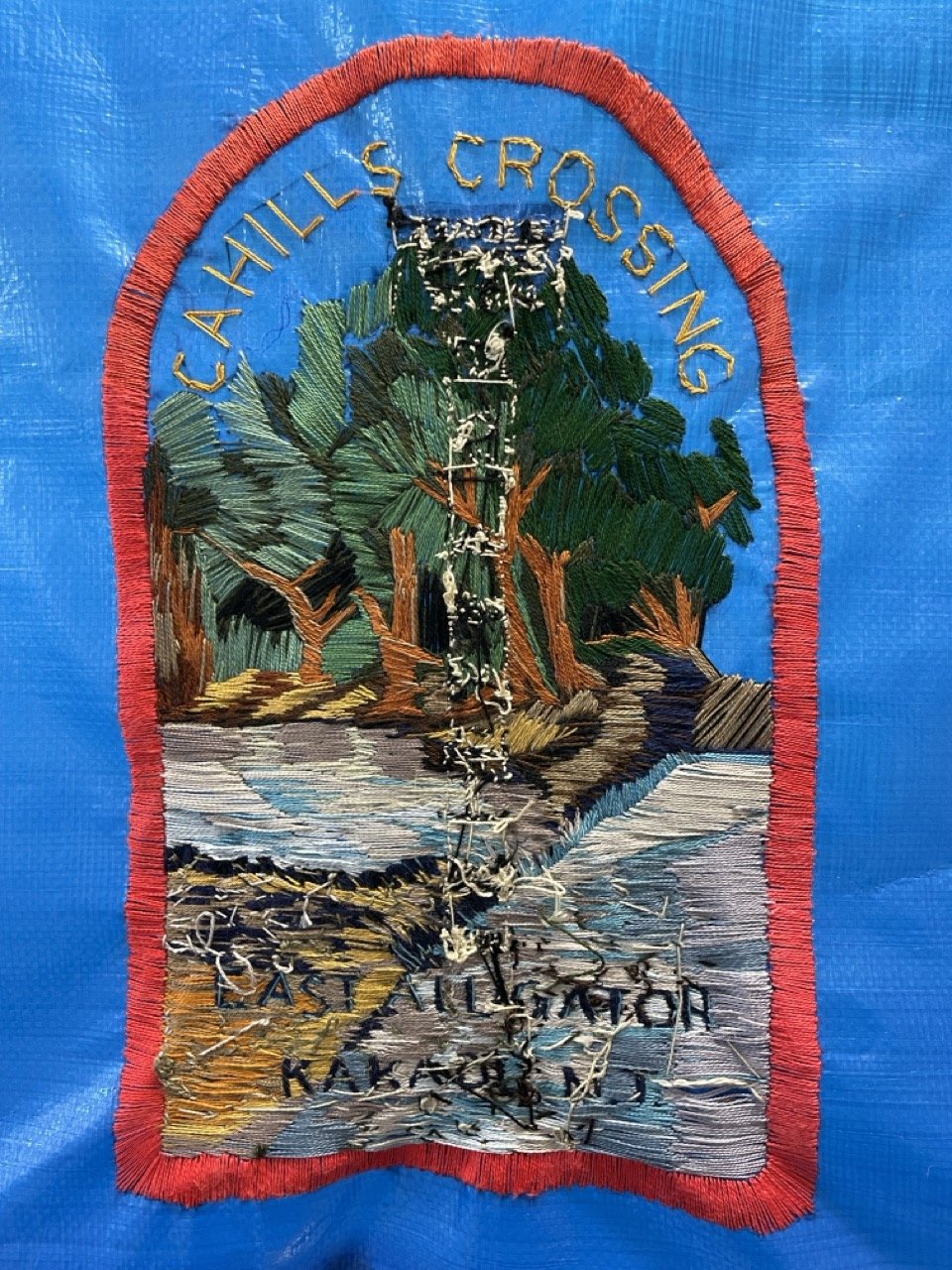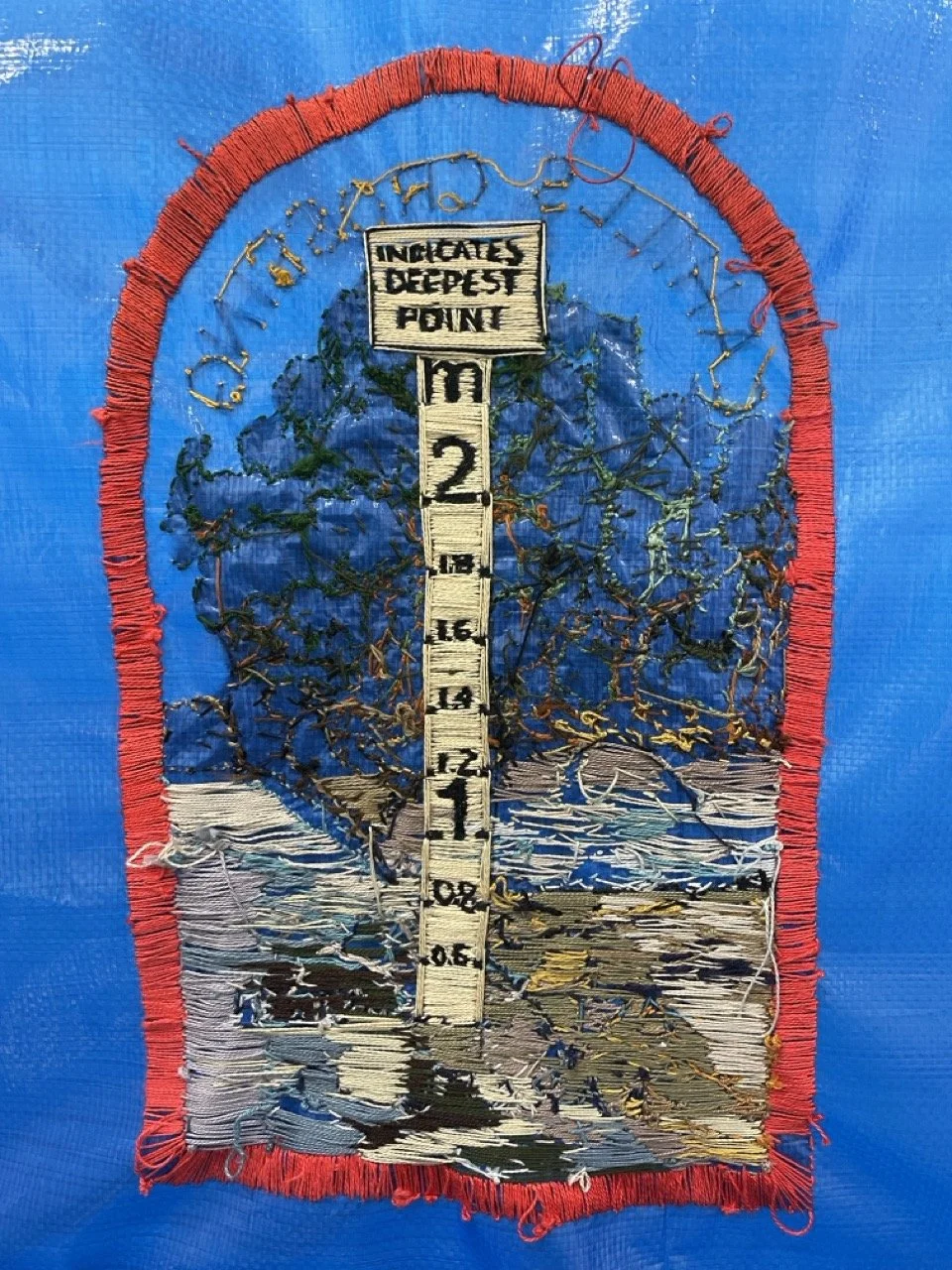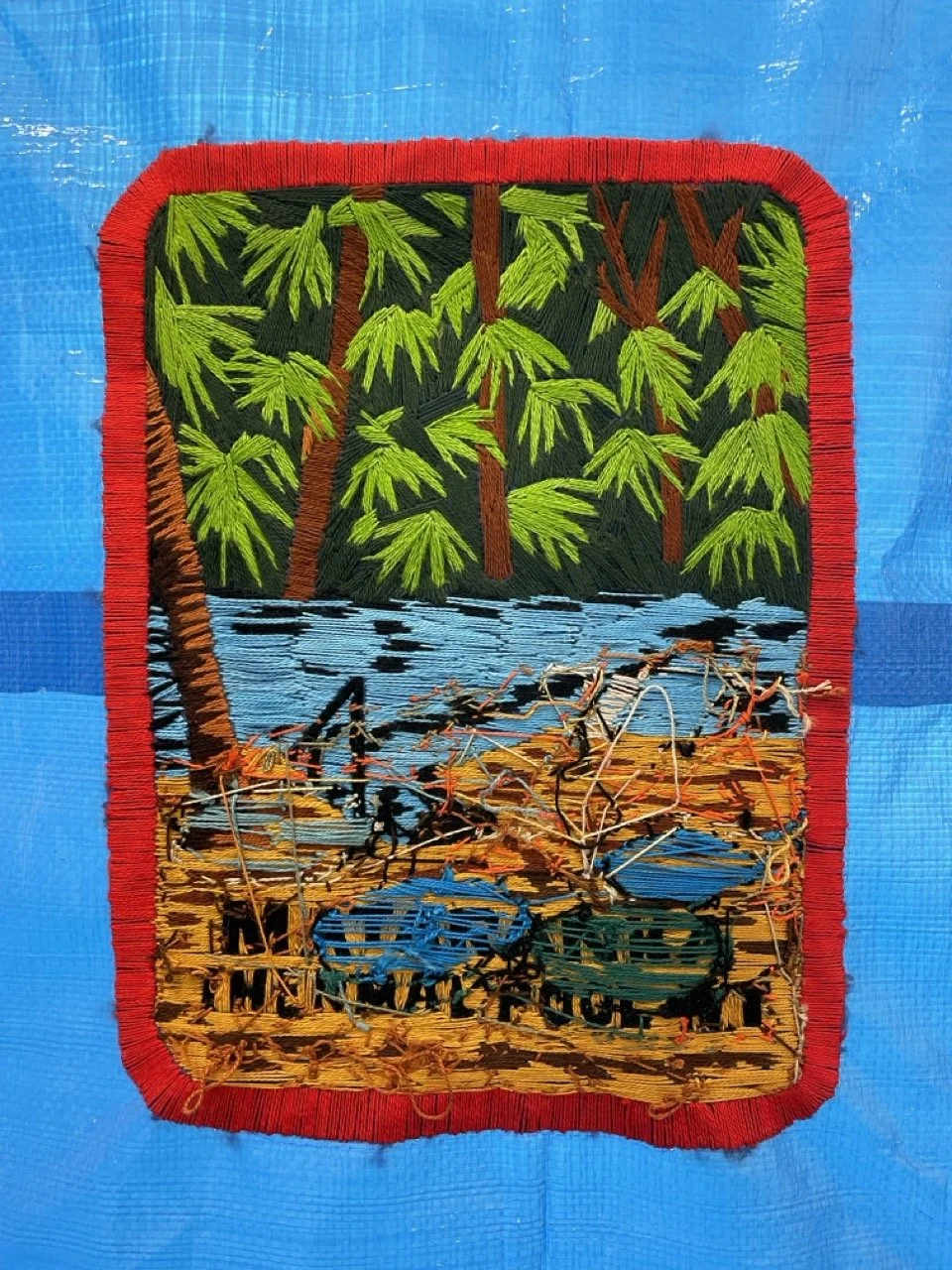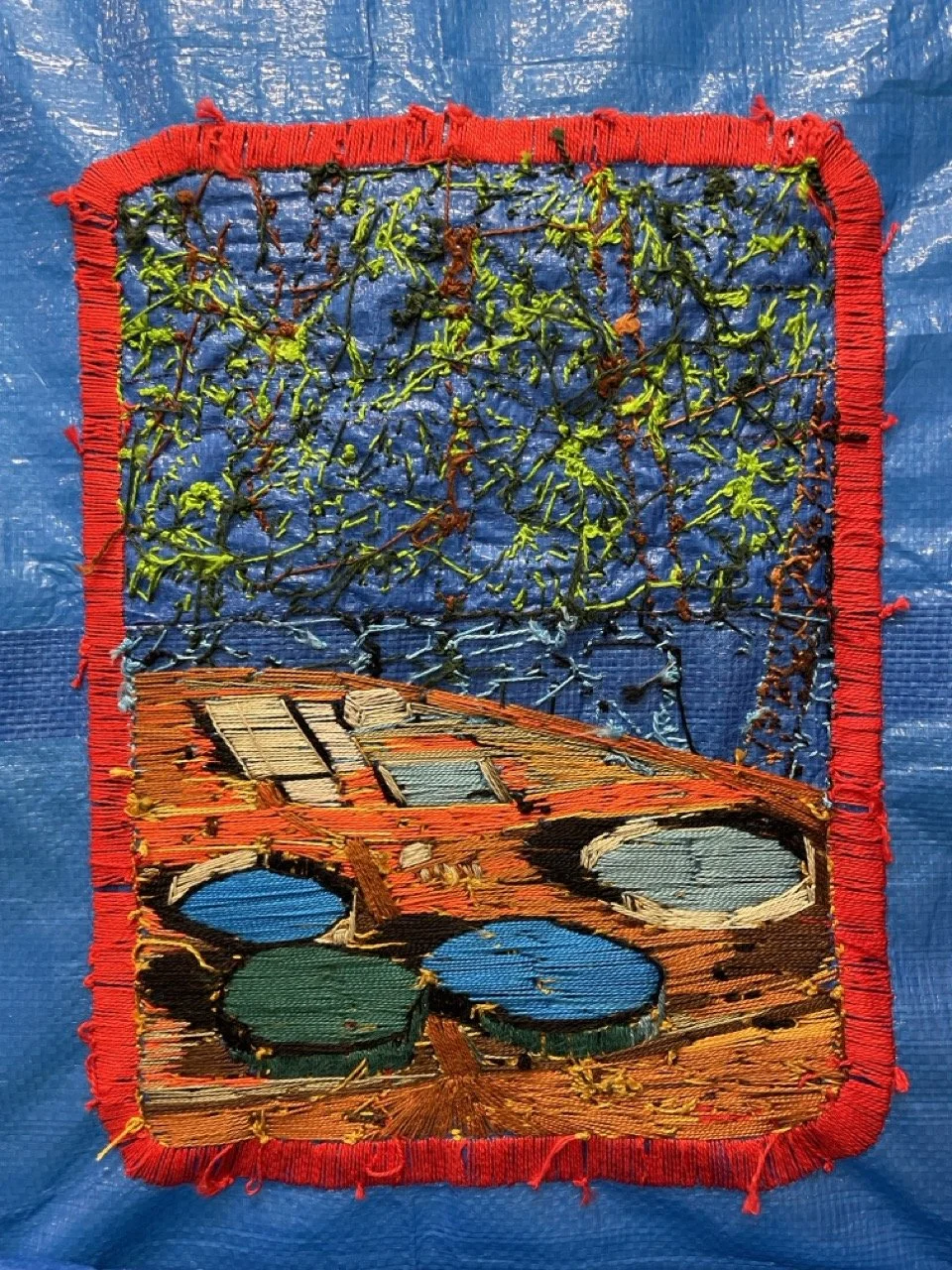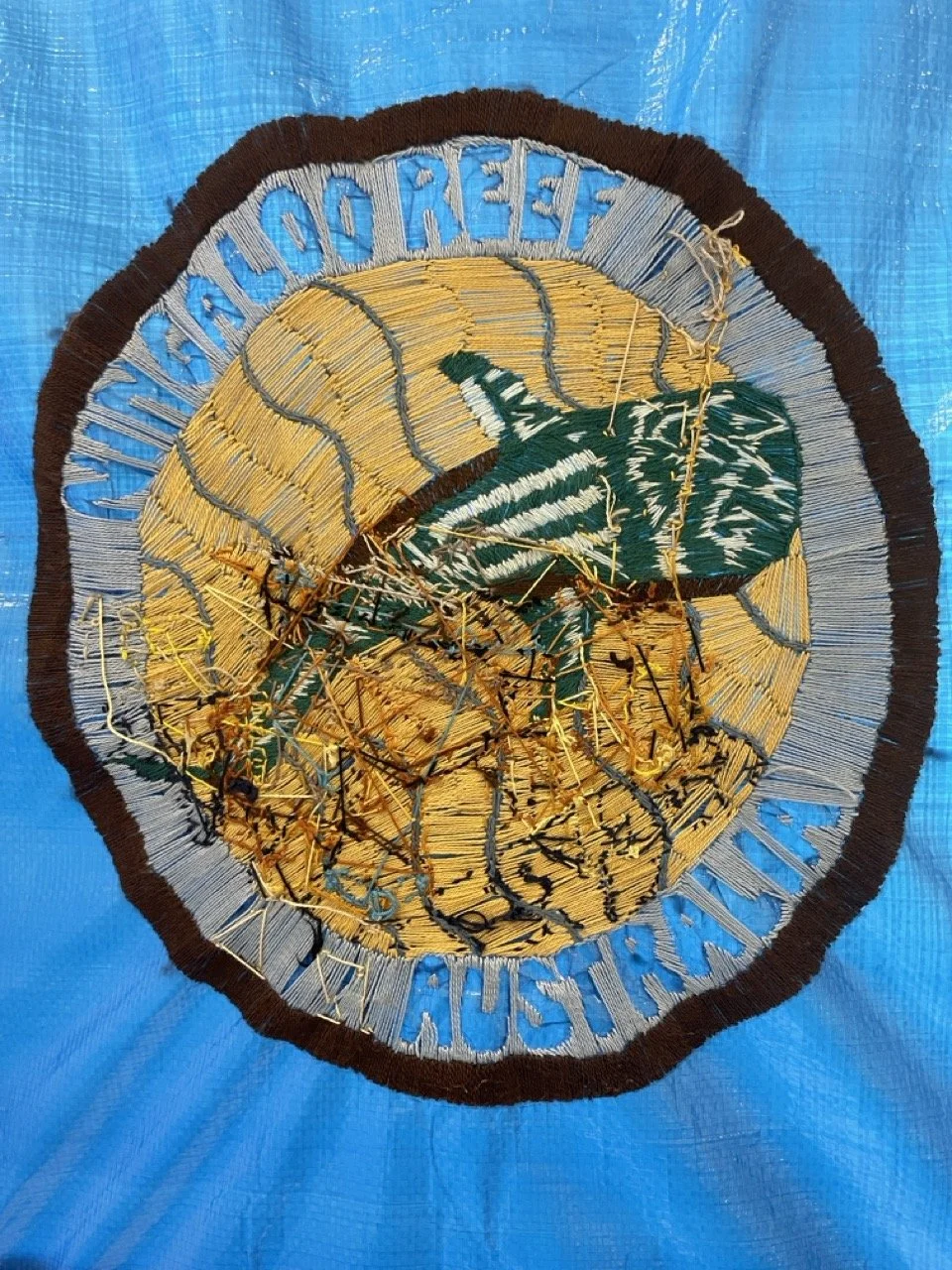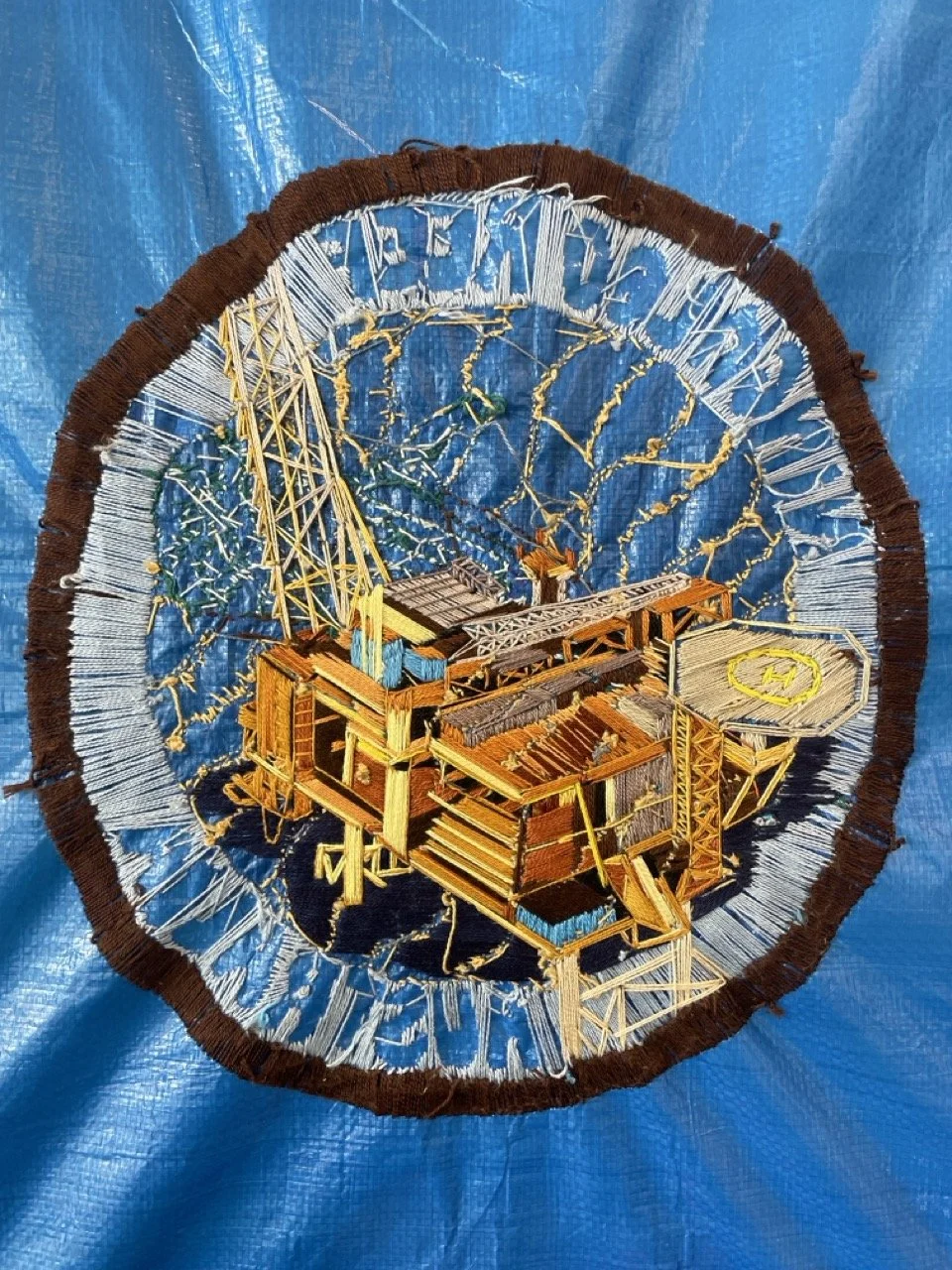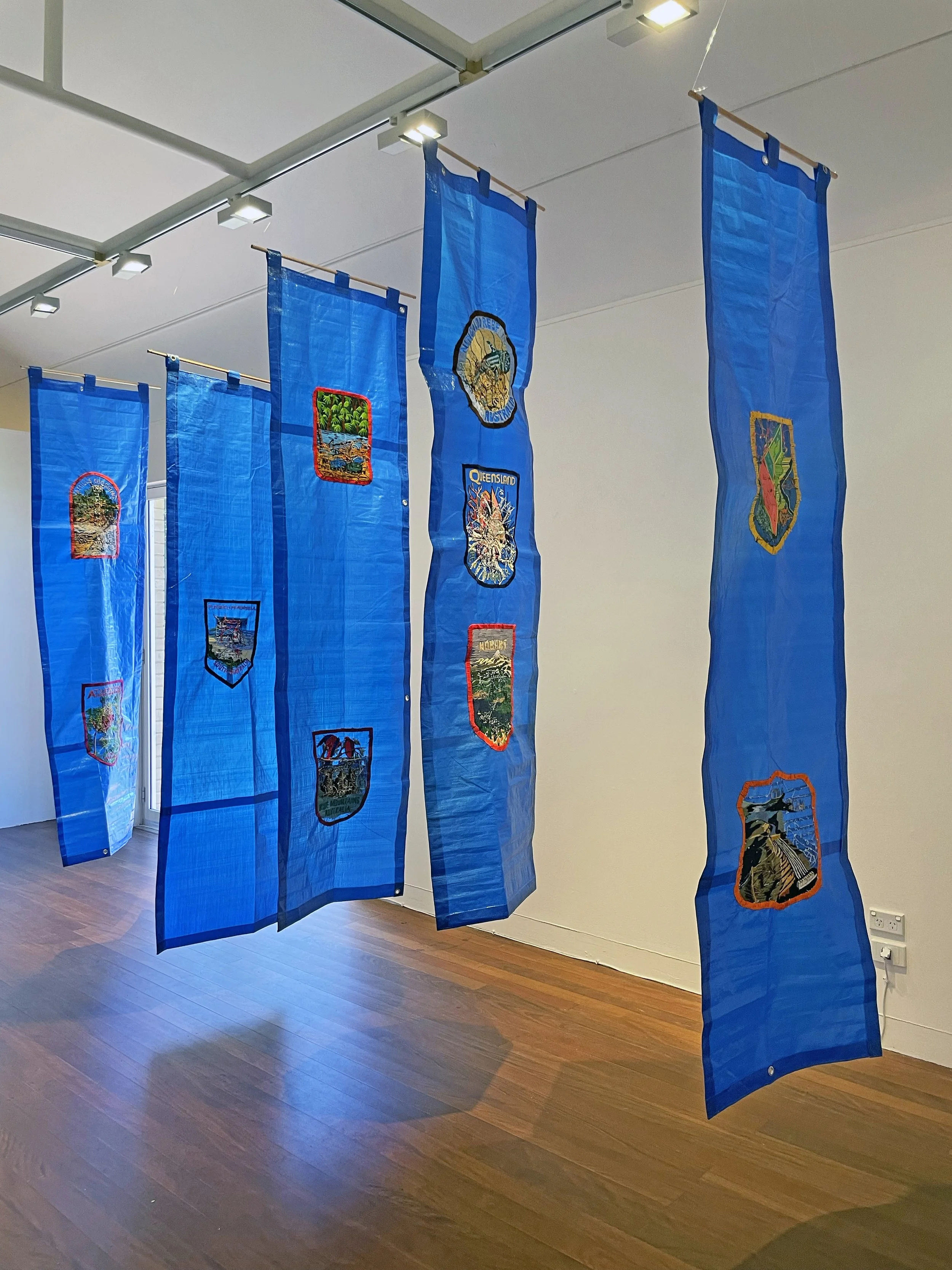
Anna Madeleine Raupach, Crosscurrents, double-sided hand-stitched tarpaulin banners, 240cm x 60cm. Installation view, The Water Understands, Manly Art Gallery & Museum, Sydney, 2024.
Crosscurrents is based on vintage embroidered patches from places across Australia known for unique relationships with water. Through a novel technique of double-sided hand-stitching, it imbues these emblematic motifs with references to threatened water ecology.
Interwoven into a series of tarpaulin banners, these works are conceptually and materially double-sided. A scaled-up replication of each patch has been embroidered on one side of the tarpaulin, then stitched through with an alternative depiction of the same place on the reverse side. This technique disrupts the original design with threads that cut across and entangle two diverse perspectives on the environment. It irreversibly connects water as iconic, celebrated, and vital, with the ways we extract, contaminate, politicise and waste it. The materiality of the tarpaulin contributes to these contradictory ideas through its capacity to protect and shelter while signalling construction, disasters and floods.
Across five panels, the work highlights ten places where water is central. Cahill’s Crossing depicts a symbolic intersection where access to remote communities is defined by seasonal change. Atherton Tablelands conveys extreme weather events of cyclone-driven rainfall and Mataranka Springs speaks to the politics of extraction. In the Blue Mountains, Warragamba Dam evokes the ecological consequences of regulating urban water supplies. On opposite coasts, Ningaloo Reef and the Great Barrier Reef place heritage-listed marine environments against damage from offshore industry and climate-driven coral bleaching. Hobart references the impacts of salmon farming on local waterways, while Mildura in the Murray–Darling basin symbolises floodplain harvesting where water accounting is contested. Mt Kosciuszko draws attention to engineered alpine hydrology through the Snowy Hydro Scheme, and the Fleurieu Peninsula to coastal erosion and sea-level rise.
Together, these narratives explore the complexities of water in Australia today and considers how these impacts are collecting for future generations downstream.